
Procurement & suppliers
Catching invoice creep before it reaches your menu
Sam
Chefy team8 min read

The supplier increases that hurt a kitchen most are rarely the ones that make the news. They arrive quietly, one line on one invoice, a few cents on a carton of cream or a box of gloves, and nothing on the menu changes to meet them.
A week later the delivery driver hands over a docket you sign without reading closely. The recipe card still says cream costs what it cost in autumn. The dish still sells for the same price. And the gap between the two, the margin, has quietly narrowed, with nothing on your P&L flashing red until the end-of-month or end-of-quarter review.
This is price creep, and it is how most food cost blowouts in Australian kitchens actually happen. Not one dramatic jump, but dozens of small supplier price increases that never get re-costed. Catching them early is the difference between a menu priced on today's numbers and one priced on numbers from three months ago.
10.7%
Rise in Australian manufacturing input prices in the year to June 2026, led by fuel: the upstream pressure heading for your invoices
ABS Producer Price Indexes, Australia, June 2026 quarter
Why supplier price increases are squeezing Australian restaurants in 2026
Headline inflation is easing at last, down to 3.8% in the year to June 2026 on the ABS quarterly figures. Very little of that relief reaches a kitchen's cost line. We mapped where each ingredient is heading in our 2026-27 food price forecast, and the short version is that the inputs a menu depends on are still moving, each on its own schedule.
Step behind the menu and the picture is sharper. The prices cafes, restaurants and takeaway venues charge rose 4.0% over the year to June, on the ABS Producer Price Indexes. The costs coming the other way moved harder: input prices across Australian manufacturing, the tier that makes much of what a kitchen buys, climbed 10.7% over the same year, led by fuel.
Ingredients are moving too. Australian trade lamb reached about 1,250c/kg carcase weight in early July 2026. Carcase weight is the dressed-carcase basis saleyard prices are quoted on, so that is $12.50 a kilogram before it is broken into portions, and it sat roughly 73% above the long-run inflation-adjusted average on tight sheep supply and strong export demand, as Farm Weekly reports from Meat and Livestock Australia saleyard data. Premium beef held firm over the same stretch, up 7.2% year on year. Whatever your kitchen buys most of, the input price is a moving target.

How price creep reaches your menu
The mechanism is simple, which is exactly why it is easy to miss. Your menu price is set once, against a recipe cost calculated at a point in time. The supplier price underneath that recipe keeps moving. Unless something forces the recipe cost to update, the menu goes on quoting a margin that no longer exists.
Price creep tends to hide in a few predictable places:
- Staple ingredients that appear in many dishes. A rise in oil, cream, flour or chicken multiplies across every recipe that uses them, so a small percentage lands as real dollars.
- The lines nobody watches. Packaging, cling film, dairy and cleaning consumables rarely get the scrutiny a protein price does, so their increases run unchecked.
- Substituted deliveries. When a supplier is out of your usual product and sends a dearer equivalent, the price changes but the recipe does not.
- Freight and small-order surcharges. These sit at the bottom of the invoice, outside the line-item prices, and never reach a recipe card at all. They move on their own cycle too: ingredients supplier TFB Trading, which publishes its fuel levy openly, reviews it fortnightly against the diesel benchmark, and in May 2026 was running it between 34% and 44% of freight depending on the city.
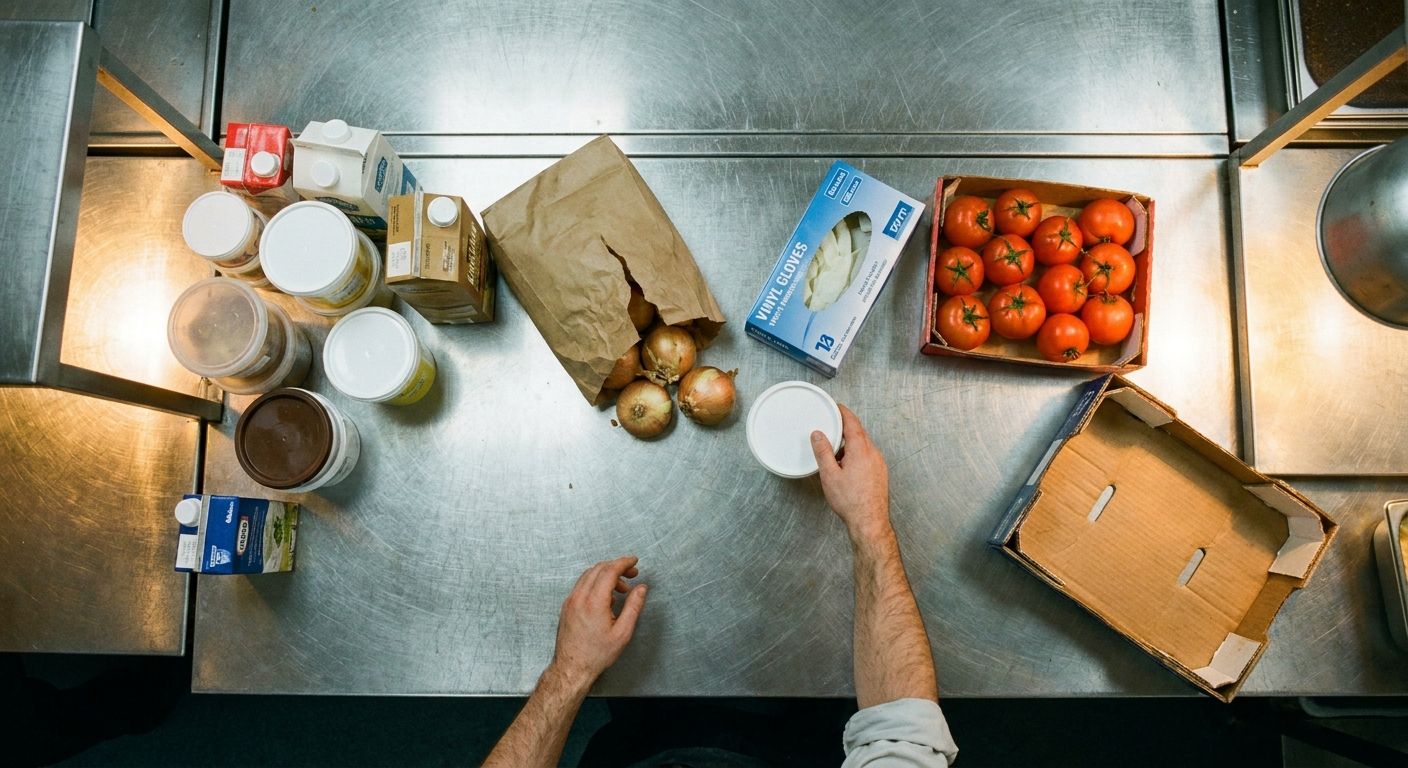
Catching invoice increases before they reach the plate
In most cases you cannot stop a supplier raising prices. What you can do is shorten the gap between the increase landing and your menu reflecting it. A few habits do most of the work:
- Check invoices against the last one, not just against the delivery. The question is not only whether you got what you ordered, but whether it cost what it cost last time. A quick line-by-line comparison catches creep at the door.
- Watch your highest-spend ingredients closely. The 20% of items that make up most of your food spend deserve most of your attention. A 5% rise on your biggest protein matters more than a 20% rise on a garnish.
- Re-cost a recipe the moment a key ingredient moves, not at the next menu print. The longer the lag, the more service you sell at the wrong price.
- Keep supplier pricing in one place, not scattered across dockets, emails and memory. You cannot compare what you cannot see side by side.
- Set a threshold that triggers a review. Decide the increase, a few per cent on a major line say, that means a dish gets re-costed and, if needed, repriced.
The stakes sit in cashflow. Hospitality runs on thin margins, and the RBA's business liaison reported in May that businesses exposed to discretionary spending, hospitality among them, were already seeing a pullback. When demand is soft, recovering every cost rise at the till is not a given, so every dollar of increase you do not catch comes straight off the bottom line. Creep is dangerous precisely because it never announces itself; the fix is a routine that surfaces it before month-end does.
A worked example: one cream price rise, two dishes
Say your dairy supplier lifts pouring cream from $6.00 to $7.20 a litre. That is a 20% increase, arriving on a single invoice in a week you were busy. On its own it looks like $1.20 a litre. Follow it onto the menu and it looks different.
Take a panna cotta using 150ml of cream. At $6.00 a litre the cream costs $0.90 a serve; at $7.20 it costs $1.08, an extra $0.18. Sell 60 a week and that is $10.80 more a week, or about $560 a year, from one ingredient in one dish.
Now the same cream in a pasta sauce using 100ml a serve. That is an extra $0.12 a plate. At 200 plates a week it adds $24 a week, about $1,250 a year. Across just those two dishes, a single 20% cream rise quietly costs roughly $1,810 a year, and if your menu is still costed as though cream is $6.00 a litre, that is margin gone before anyone notices.
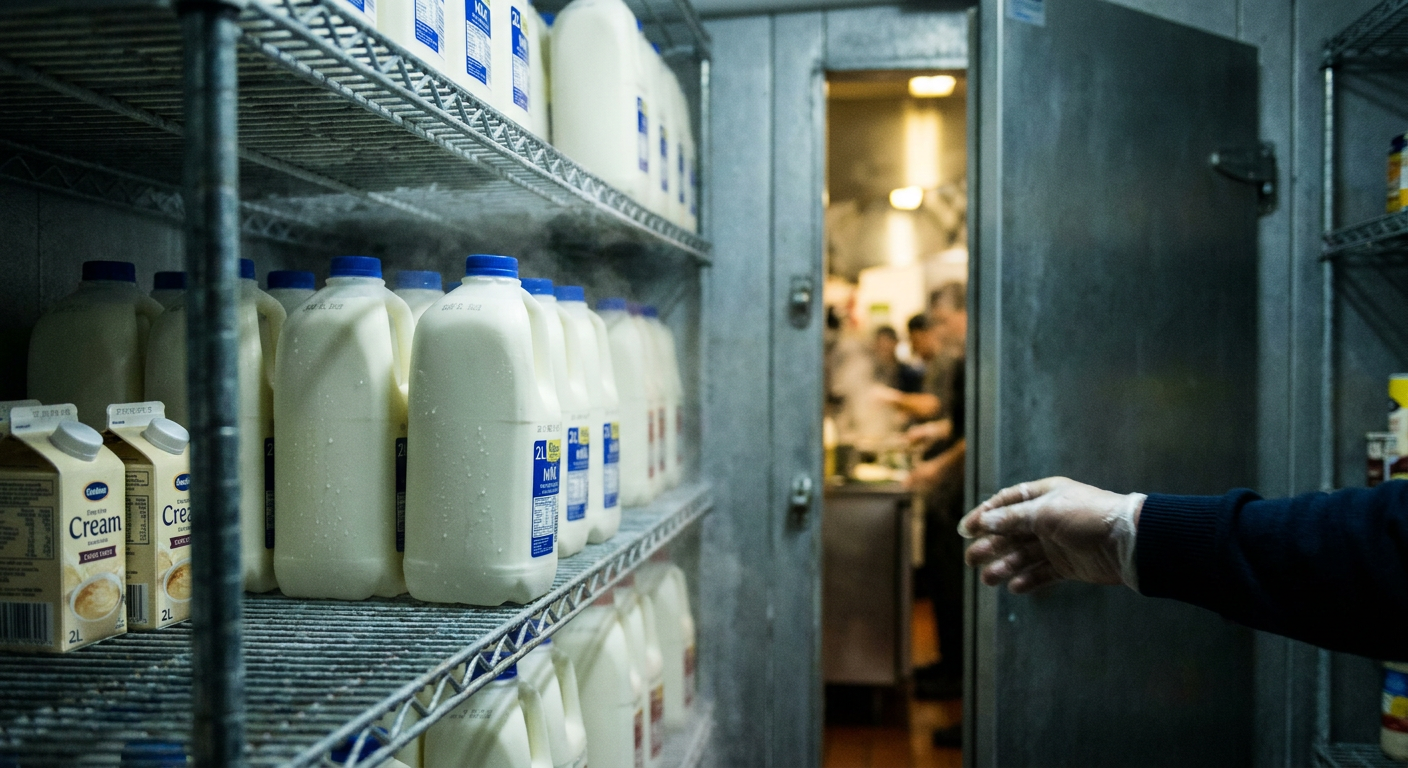
Catching the increase is step one. What you do next, absorb it, re-engineer the dish, or reprice it, is a separate decision, and one worth making dish by dish rather than by an across-the-board menu rise. We cover that call in when to reprice your menu, and when to hold.
How Chefy fits
Most of this is habit and attention, and plenty of good kitchens run it on a well-kept spreadsheet. The catch is that a spreadsheet only updates when someone remembers to update it, and a supplier price sits in one cell that feeds one dish. Chefy keeps supplier pricing linked to your recipes, so when a product price changes it cascades through every recipe and menu item that uses that ingredient, and each dish shows what it actually costs to make today rather than what it cost when you last re-costed it.
If you want to pressure-test a single dish first, the free food cost calculator gives you the food cost percentage on one recipe in a couple of minutes. For the wider set of checks that keep invoices honest, our guide to the margin breaches worth catching before month-end walks through where else cost leaks in.
See every dish at its current cost
Chefy links your supplier pricing to your recipes, so a price rise on one invoice updates every menu item that uses it, automatically.
Explore ChefyFrequently asked questions
What is supplier price creep?
Supplier price creep is the slow accumulation of small increases on the ingredients and consumables you buy, arriving a few cents at a time across many invoices rather than in one obvious jump. Because no single rise is dramatic, the increases often go un-recosted, and the menu keeps quoting a margin the current supplier prices no longer support.
How often should I check supplier prices against my recipes?
For your highest-spend ingredients, every delivery is not too often; a quick check of this invoice against the last one catches most creep at the door. For the full recipe book, re-cost whenever a key ingredient moves past a threshold you have set, and review the whole menu's costs at least quarterly so nothing drifts for a full season.
Which price increases matter most?
The ones on ingredients you buy a lot of. A small percentage rise on a staple that appears across many dishes, or on your single biggest protein, costs far more in real dollars than a large rise on a garnish or a rarely used item. Sort your suppliers by spend and watch the top of that list.
Should I reprice the menu every time a supplier raises a price?
No. Catching the increase and deciding what to do about it are two different steps. Some rises you absorb, some you offset by re-engineering the dish, and some justify a price change, and that call is best made dish by dish rather than as a blanket menu increase. The point of catching creep early is that you get to make the decision on time, with the real numbers in front of you.
Can a spreadsheet handle this?
It can, up to a point, if someone keeps it current. The weakness is that a spreadsheet only reflects a price change once a person types it in, and one ingredient often feeds many recipes, so a single missed update leaves several dishes mis-costed. Costing software that links supplier prices to recipes closes that gap by updating every affected dish at once.
Sources
- Australian Bureau of Statistics, Consumer Price Index, Australia, June 2026 quarter, July 2026
- Australian Bureau of Statistics, Producer Price Indexes, Australia, June 2026 quarter, July 2026
- Farm Weekly, Saleyard indicators, from Meat and Livestock Australia data, July 2026
- TFB Trading, Fuel Levy Update, 4 May 2026, May 2026
- Reserve Bank of Australia, Statement on Monetary Policy, May 2026, Box A: Insights from Liaison, May 2026
Sam · Chefy team
The Chefy team writes about margin, costing and running tighter venues across Australian hospitality.
See Chefy on your own numbers
Book a demo and we'll map your venues, team and modules and show you the monthly cost.
Book a demo