
Margin & costing
Menu pricing strategy: when to reprice your menu, and when to hold
Sam
Chefy team9 min read

Most menus get repriced once a year, usually in a rush before a new financial year, then left alone until the next one. Your costs do not keep to that schedule - a supplier lifts the price of cream in March, beef drifts lower through autumn, and by winter the dish you costed last July is earning something quite different from what your menu assumes.
That is the gap in most menu pricing strategy advice: it explains how to set a price on day one and says almost nothing about when to move it. Price on the calendar and you are always reacting late. Price on your margins and you move the right dish at the right time, only when the numbers call for it.
Why an annual reprice stops working in 2026
The new financial year opened with the biggest cost step of 2026: the Fair Work Commission's Annual Wage Review lifted award and minimum rates by 4.75% from 1 July. For an award-reliant kitchen, that one decision repriced every rostered hour in the business, and it landed on menus that were mostly costed a year ago.
There is no fat to absorb it. IBISWorld figures cited in the same Commission decision put the net profit margin of the average restaurant at 2.8%, cafes and coffee shops at 2.6% and catering at 2.3%, and the Commission described restaurant margins as tight and declining. The Restaurant & Catering Association's 2025 benchmarking adds that labour and cost of goods together can account for more than 75% of turnover for many businesses, leaving limited room to absorb increases in rent, energy, insurance and everything else. At margins that thin, a couple of points of unmanaged cost drift is the difference between a profit and a loss.
The sector's books show what happens when the drift goes unmanaged. Food and beverage services carried the highest insolvency rate of any industry at 2.24% in CreditorWatch's May 2026 Business Risk Index, with 11.37% of its invoices more than 60 days overdue. And when R&CA asked operators how net profit had moved over the past three years, roughly half said it had decreased, a result the report sums up bluntly: prices are rising faster than profitability.
So repricing is already happening across the sector. The question is not whether to move prices. It is which ones, and when, so you are precise rather than reactive.

81%
of venues expect to raise menu and meal prices within 12 months
R&CA 2025 Industry Benchmarking Report, March 2026
Where a cadence fits in a menu pricing strategy
Most menu pricing strategy guides stop at how to set the number. Cost-plus pricing works up from the plate cost to a target food cost percentage. Value-based pricing works down from what the dish is worth to your guests, which is why the wagyu carries a different margin to the wings. Psychological pricing shapes how the number reads on the page, the reason menus end prices in 50s and 90s and often drop the dollar sign entirely.
All three are useful. None of them answers the question that decides whether your pricing keeps working: when do you revisit the number? A repricing cadence is that missing layer. It does not replace how you price; it keeps whichever method you use honest as costs move underneath it. The rest of this post is that cadence: the signals that should trigger a review, which dishes to check first, and a routine a lean team can actually run.
Trigger a reprice on your margins, not the calendar
A margin-driven reprice is set off by an event, not a date. Five signals are worth wiring in:
- A tracked input moves beyond a threshold you set. Volatile lines like proteins, dairy and oils earn a tight trigger, somewhere around 3-5% movement since you last costed them. Stable dry goods can run looser at 8-10%. The point of a threshold is that it makes the review automatic instead of a judgement call during service.
- A dish's food cost percentage crosses out of its target band, in either direction. Below the band matters too: it is either room to hold price while competitors move, or a sign a portion is drifting small.
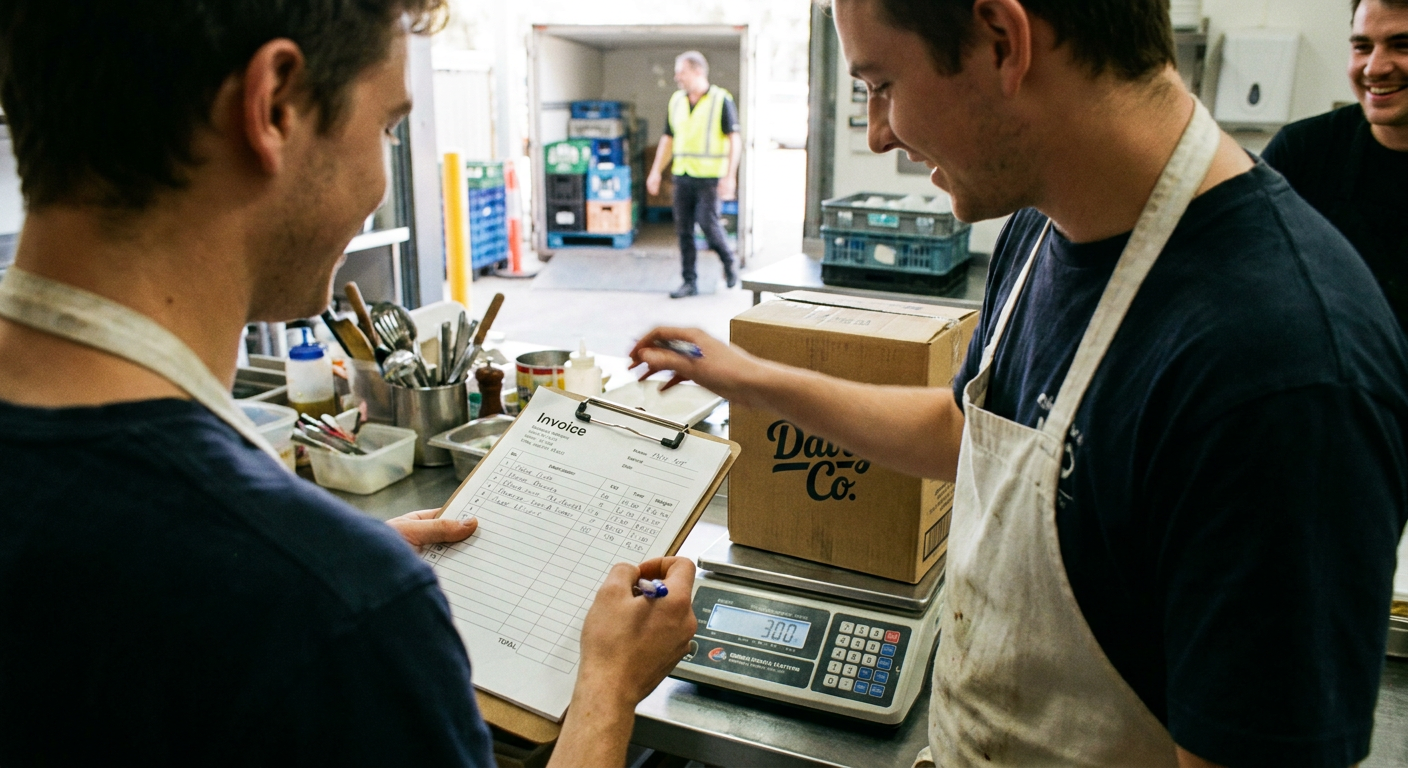
- A supplier sends an updated price list. This is the moment your recipe costs quietly change underneath you, and it is the same discipline as the procurement controls that protect margin: the agreed list, the invoice and the goods received should tell one story before the new price flows into your recipes.
- Your menu mix shifts and a lower-margin dish becomes a bestseller. Mix moves your blended margin without a single supplier price changing. If a pasta running 62% gross profit overtakes a risotto running 71% as your top seller, the margin you actually bank each week just fell while every recipe cost held still. Volume decides how much any dish's margin matters.
- A seasonal produce swing lands, either lifting cost on out-of-season lines or opening room to hold price and rebuild margin on the cheap ones.
Not every input moves the same way
Repricing well also means resisting the urge to add a flat percentage to everything, because your inputs rarely move in the same direction at once. Right now the split is unusually clear: the 2026-27 forecasts have the main proteins easing while dairy tightens and gets dearer. We walked through those numbers dish by dish in our food price forecast for 2026-27, so this post will not repeat them. The direction is what matters here.
When one side of the menu is getting cheaper while the other side gets dearer, a blanket rise overcharges the dishes that are recovering on their own and undercharges the ones quietly slipping. In practice that means the cream and cheese dishes are the ones to check first this quarter, while the beef lines may deserve a hold. Reprice each dish from its current cost, not from a single number applied across the board.
A worked example
Say you costed a pasta dish last July at $6.24 of food, sold at $26, for a 24% food cost. Cream and parmesan have firmed since, and the same dish now costs $7.15 to make, a 27.5% food cost. If your target for that dish is 25%, the price that gets you back there is $7.15 divided by 0.25, or $28.60.
You put it on the menu at $28.50, not $28.60. That last ten cents is psychological pricing doing quiet work: $28.50 reads like a settled price point on the page, while $28.60 reads like a calculation and invites the guest to make one of their own. Round to the price points your menu already uses.
Now take a steak on the same menu, sold at $39. Beef has eased, so its food cost has drifted from 33% down to 30%, comfortably inside a 32% target. You leave it alone and let the recovering input rebuild margin. Two dishes, two directions, one recost. That is the difference between repricing by dish and repricing by decree.

See every dish at its current cost
Chefy links your supplier pricing to your recipes, so each menu item shows what it actually costs to make today.
Explore ChefyA cadence you can actually run
Turned into a routine, a margin-driven cadence has four layers, each doing a different job:
- Weekly: scan supplier price-list changes and flag any input past its threshold. Ten minutes if your price lists arrive digitally, most of a morning if they arrive as PDFs in an inbox.
- Monthly: recost the dishes the flagged inputs touch, check each against its target band, and reprice only the ones that have drifted out.
- Quarterly: recost the full menu at current prices and review the sales mix, so slow movers and quiet winners surface before they distort the quarter.
- Annually: the structural work that needs a clear run at it: menu redesign, target-margin resets and supplier negotiations.
The annual reprice does not disappear. It just stops being your only line of defence.
How Chefy fits
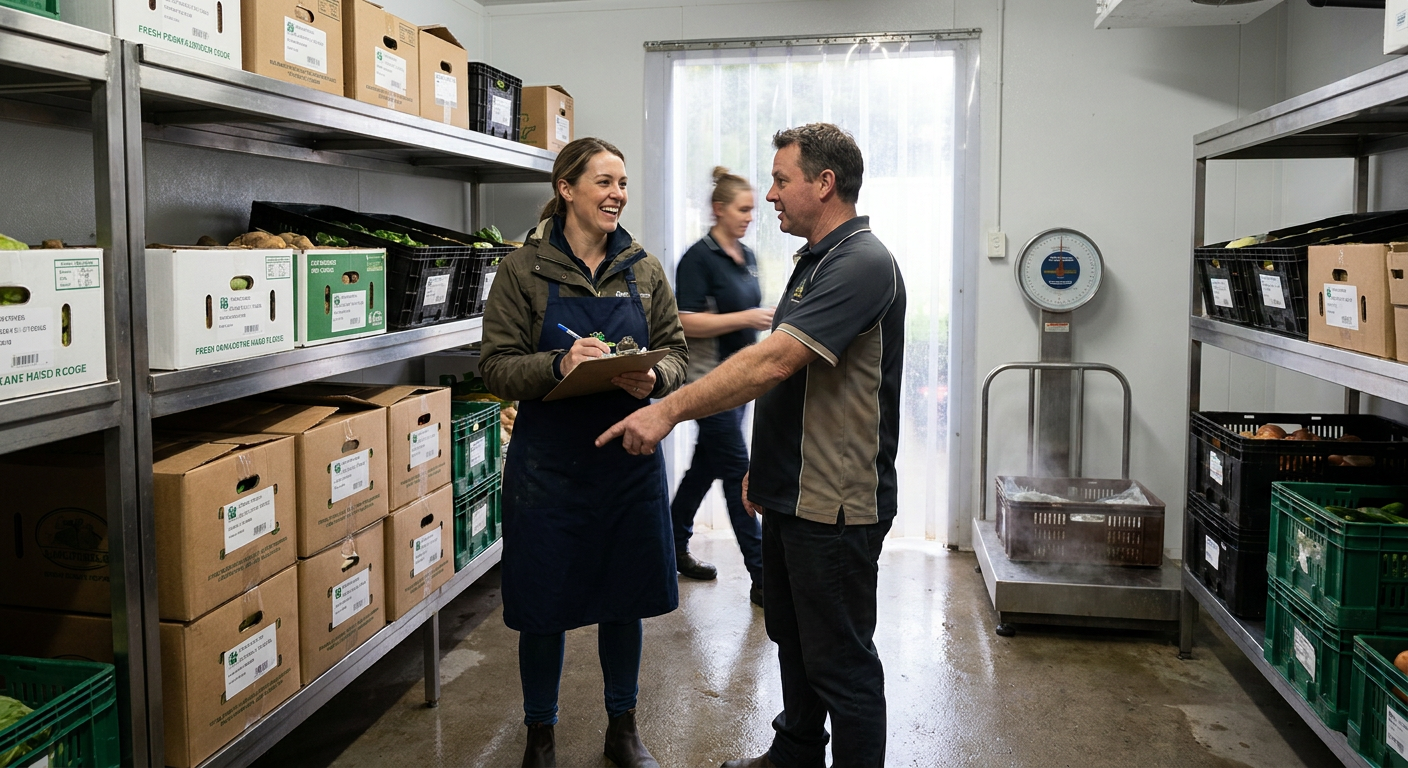
The reason most venues fall back to an annual reprice is simple: recosting every dish from current supplier prices by hand is slow, so it only happens when someone has time to rebuild the spreadsheet. Chefy keeps supplier pricing, recipes and menu items linked, so when a product price changes the updated cost flows through to every recipe and menu item that uses it. The weekly scan becomes a glance, and the monthly recost becomes a read instead of a rebuild, which is what makes a tighter cadence realistic for a lean team. If you want to sanity-check a single dish first, the free food cost calculator does the target-price maths from the worked example above in about a minute.
Frequently asked questions
How often should I reprice my menu?
There is no single right interval, and that is the point of a margin-driven cadence: you reprice when the numbers say so, not on a date. In practice, scan supplier price changes weekly, recost affected dishes monthly and reprice the ones outside their target band, recost the full menu each quarter, and keep the structural review annual.
Should I reprice the whole menu at once or dish by dish?
Dish by dish, from each dish's current cost. Input costs do not move together; through 2026-27 the main proteins are forecast to ease while dairy firms, so a flat percentage rise overcharges the dishes getting cheaper and undercharges the ones getting dearer. Blanket rises are how menus drift out of shape.
What food cost percentage should I aim for?
Set a target band for each dish rather than one number for the venue, because a garnish-heavy entree and a premium protein cannot carry the same target. For context, R&CA's 2025 benchmarking puts food costs at an average of 38% of turnover across Australian hospitality venues, with beverage costs a separate line again. The venue average matters less than each dish holding the band you set for it. Decide the band per dish, then let drift outside it trigger the review.
Will customers notice frequent small price changes?
Far less than they notice one big annual jump. Small, targeted moves on individual dishes keep you in step with a market where most venues are lifting prices anyway, and they avoid the sticker shock of a menu catching up all at once. The dishes to treat carefully are your signatures: guests anchor on those, so move them last and by the least.
Sources
Sam · Chefy team
The Chefy team writes about margin, costing and running tighter venues across Australian hospitality.
See Chefy on your own numbers
Book a demo and we'll map your venues, team and modules and show you the monthly cost.
Book a demo